
From Atheism to Ashes
By Chris Palmer
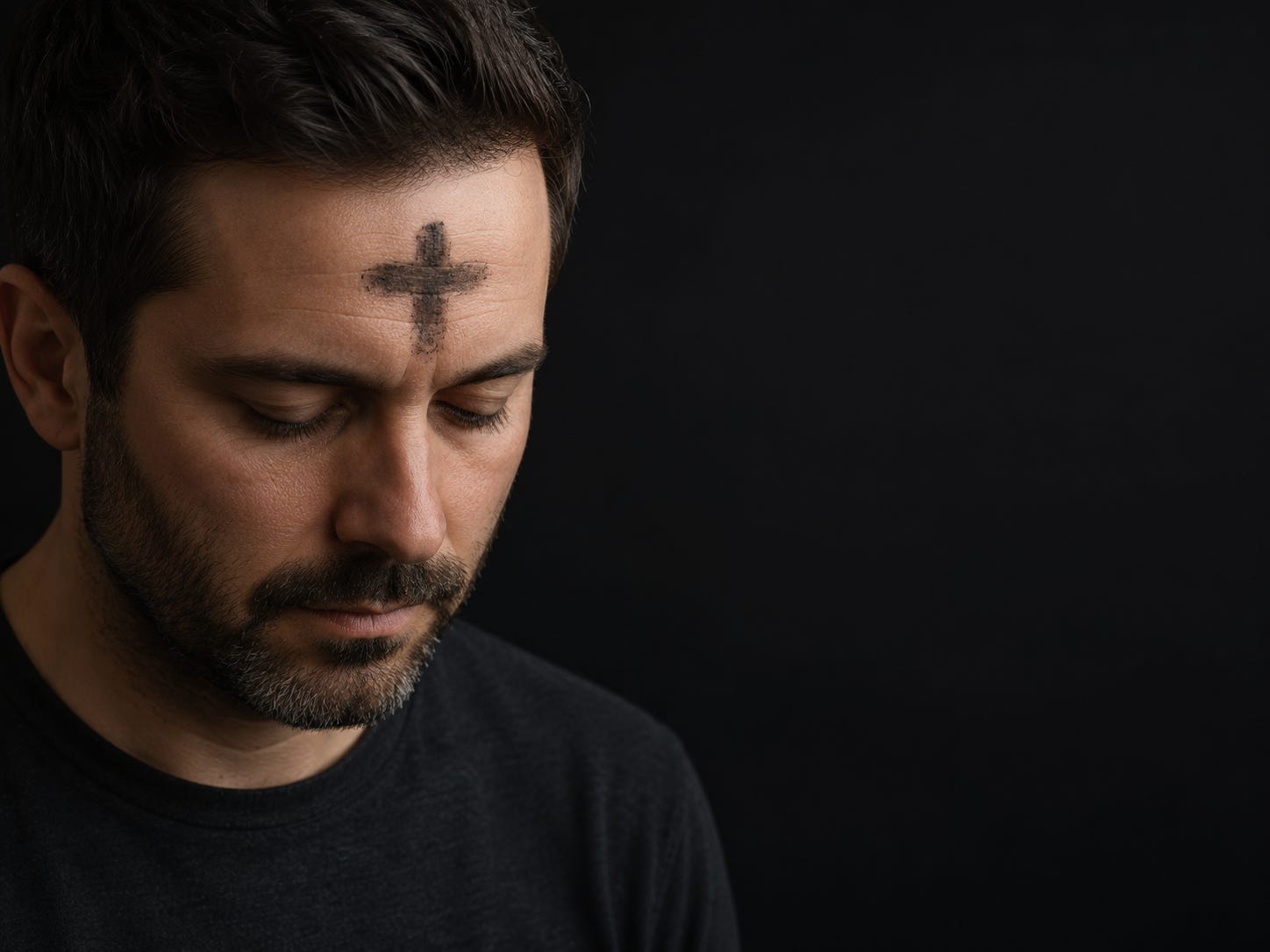
In 2025, columnist Giles Coren wrote a piece for The Times at the start of Lent, titled “This Lent I Will Turn Atheism to Ashes.” A self-described “lapsed atheist,” Coren recounts how his decision to give up atheism began one Ash Wednesday, when a vicar dipped his finger into palm ash, marked Coren’s forehead with a cross, and reminded him, “You are dust, and to dust you shall return.”
In the piece, Coren argues that atheism has become the default stance of modern adulthood. It arrives with birth certificates, embedded in a culture shaped by nihilism. Science, reason, and the relentless flood of information deepen its hold, making unbelief seem inevitable. Yet, he notes, atheists often fail to see how fully saturated society already is with their worldview. “Many atheists think we want to hear their irrefutable arguments against belief and witty put-downs of the faithful,” he writes, “but I just wonder, ‘Why do you bother? To whom are you talking? Who do you think is not already an atheist?’ ” He sees the world as a kind of Novemberton.*
Still, his experience with atheism, he admits, “left a hole.”
“My childhood was godless,” he writes, “and there was room for improvement.”
The death of his father was a turning point. “It seemed to me, at the very end, that God might have been useful to him [his father]. And it would certainly have helped us, when we buried him, to have had some formal tradition for the ceremony, rather than having to make it up as we went along.”
It was his son who eventually led him back.
One day, the boy, raised like him, in no tradition at all, said he wanted to go to church.
“I said okay . . . And we’ve been going ever since.”
In that small parish, Coren found what atheism could not offer: substance, beauty, and enchantment.
“Inside, it is vast, awesomely rectilinear and full of light from the high windows that are gently stained but only in squares, not pictures . . . The congregation is small but intense . . . The homily is always good, the organ music magical. There are bells and incense, bowing and genuflecting, a snug Eucharist and much talk of saints and the Virgin . . . And I have a sense that God is there—in the tradition, the words, the two thousand years of conviction, the imagination of all the people who came before me.”
He ends with a memory: his grandfather’s burial, beside a muddy hole in a bleak cemetery. His father, who had long abandoned faith, stood by the grave, weeping. Coren longed for something more than a surrender to that kind of despair.
. . . Maybe part of secular society, burdened by infobesity and disillusionment, is quietly losing faith in its own unbelief. The bold certainty of the mid-2000s—Hitchens, Dawkins, Dennett, Harris—feels brittle now. The Four Horsemen rode hard, but the terrain beneath them has shifted.
I think of the New Thinkers—Tom Holland, Douglas Murray, Louise Perry, Jonathan Haidt, Ayaan Hirsi Ali, John Vervaeke, Jordan Peterson. They are evidence of this changing tide. They’ve watched the confidence of secular humanism crack, watched the fallout: despair, fragmentation, chaos. They ask whether we can really move forward without something sacred. Without roots. Without a story.
* Novemberton is an imagined town in this volume that represents a bleak, exhausted culture searching for meaning in a nihilistic age. It echoes Herman Melville’s famous line from Moby-Dick describing a “damp, drizzly November in my soul.”
— Chris Palmer (PhD Bangor University, Wales UK) is the Dean of the Barnett College of Ministry and Theology at Southeastern University in Lakeland, FL. He has 18 years of fulltime ministry experience, missionary work in over 40 nations, and taught at Moody Theological Seminary, Austin Christian University, and Theos University.
---
Excerpted from A World Without God: The Search for Meaning in a Society Overwhelmed by Despair by Chris Palmer (Zondervan Reflective, 2026). Used by permission.
Like Dostoyevsky’s enigmatic characters and the brutal depictions of reality in the book of Judges, this book considers—in the form of narrative philosophy—the consequences of abandoning faith in God. Journeying into the nihilistic haze of technological oversaturation and moral decline, Chris Palmer confronts today’s most persistent questions about meaning, purpose, and existence in a world adrift.
In its fresh look at key influences in literature—from Albert Camus to Jordan Peterson—this book examines how people search for meaning without a creator and how the absence of the divine can lead to chaos and psychological collapse.
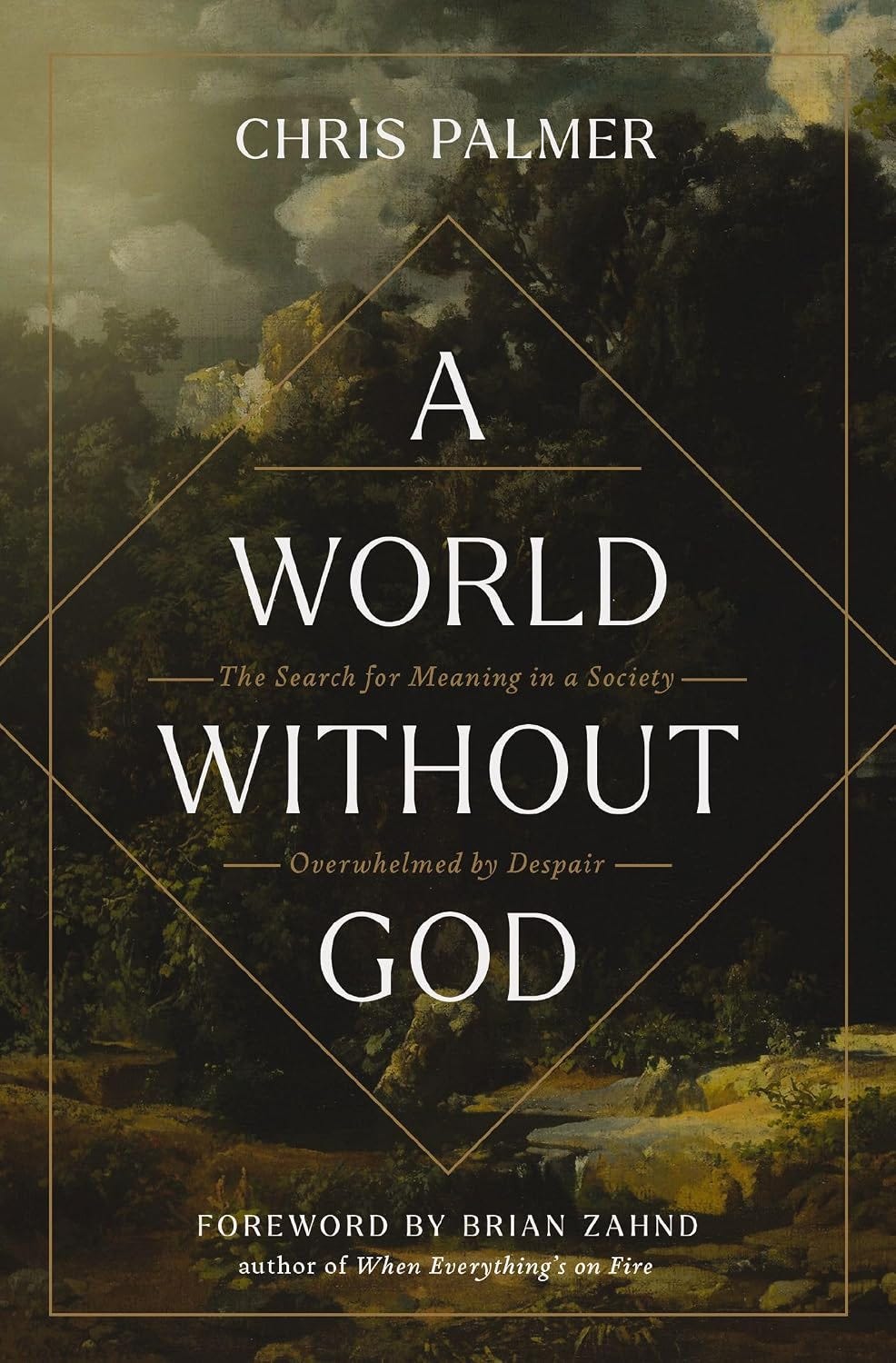
Find A World Without God at Zondervan, Amazon, Barnes & Noble, Christianbook.com, Books-A-Million, and Walmart.
*sponsored