
Why Did Jesus Come?
By Paul Copan
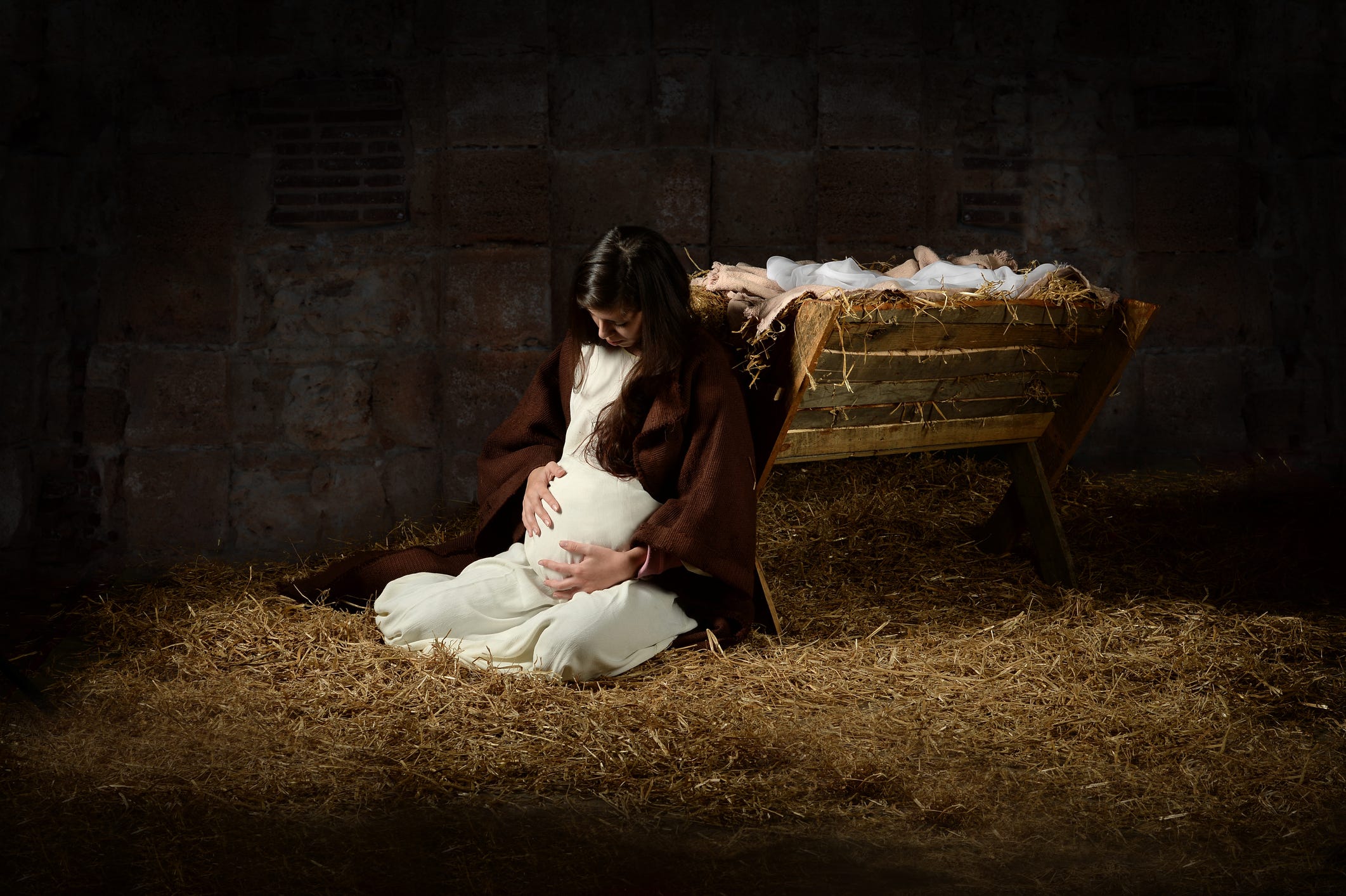
As we reflect on the Incarnation—the Word becoming flesh and dwelling among us—we think of the overarching reasons for his coming to earth—reasons that are largely centered on salvation. We’re given early indicators of this in the birth narratives of Matthew and Luke:
Matthew 1:21: Joseph is instructed to “call His name Jesus, for He will save His people from their sins.”
In Luke 2:11: the angel tells the shepherds: “today in the city of David there has been born for you a Savior, who is Christ the Lord.”
“The Lord Is Salvation”
As you may know, Jesus’ name is the very name of Joshua in the Old Testament. This is made clear in the Greek New Testament: when this Old Testament character Joshua is mentioned in Acts 7:45 and Hebrews 4:8, the Greek rendering is identical to that of its rendering of Jesus. And what does Joshua’s (and Jesus’) name mean? “The Lord is salvation.”
This reality of salvation is the focal point of the various indicator words in the New Testament. This becomes apparent when we read about (a) Christ’s own declaration about his reason for coming and (b) when another New Testament authority makes a theological declaration about why Christ came.[1]
Some Preliminary Considerations on Why Jesus Came
In one place (Matt. 10:34-5), Jesus declares that he has come not to bring peace but a sword (i.e., division). As F.F. Bruce pointed out, this was not the purpose of Jesus’ coming; rather, it was the result of his making lofty self-identity claims, which naturally led to divisions of allegiance even within families. Related to this theme is Jesus’ self-declared mission to come to “cast fire” on the earth (Lk. 12:49), which has positive as well as negative aspects. This purpose includes purification, refinement, and transformation—new wine that requires new wineskins (Mt. 9:16-17). There is a danger that the new wine of Jesus’ message would burst old wineskins of the religious leaders who refused God’s purposes for their lives (e.g., Lk. 7:30).
And in the powerful, parabolic narrative of the man born blind (who first sees Jesus as a man and then a prophet and then Lord/the Son of Man), Jesus declares that he came “for judgment” (Jn. 9:39). As this chapter shows, the purpose of Jesus coming was to bring light to the spiritually blind, but this would also reveal the spiritual blindness of those who claimed to see but refused to receive God’s revelation in Jesus.
In Matthew 5:17, Jesus declares that he has come to fulfill the Law and the Prophets, and then he elaborates on this in the remainder of chapter 5. He tells us how the Mosaic law had been abused and misquoted by his contemporaries, and Jesus corrected these misunderstandings and speaks to the spirit of the Mosaic law. Jesus did not come to abolish it or to repudiate it.[2] Indeed, the Law, the Psalms, and the Prophets all spoke of Jesus (Lk. 24:44).
Jesus Comes to Save
As we have noted, though, the major reason for Jesus’ coming is focused on salvation. Jesus has come “to call sinners” rather than the self-righteous (Mt. 9:13; Mk. 2:17; Lk. 5:32). He has come “to seek and to save the lost” (Lk. 19:10). Jesus was sent into the world that it might be “saved through Him” (Jn. 3:17; cf. 12:47). Indeed, Christ Jesus came into the world to “save sinners” (1 Tim. 1:15); he was sent to be the Savior of the world (1 Jn. 4:14) and to be a propitiation for our sins (1 Jn. 4:10) and turn away the triune God’s divine wrath against us. Jesus came to “take away sins” (1 Jn. 3:5). Yes, Jesus declared that he had come on a specific mission to restore “the lost sheep of the house of Israel” (Mt. 15:24); Paul later comments on this reason for Jesus’ coming—to “redeem those under the Law” so that they might be adopted as sons (Gal 4:5), but Jesus came with a larger mission—to make Jews and Gentiles children of Abraham (Gal. 3). In general, the Father sent Jesus “to bless you” (Ac. 3:26), and Jesus himself declared that he had come to bring “life” in its abundance to us (Jn. 10:10; 1 Jn. 4:9).
Jesus came not to be served but to serve and to “give His life as a ransom for many” (Mt. 20:28; Mk. 10:45). This Suffering Servant’s sacrifice reflected his deeper commitment to his Father’s will, which he had come to do (Heb. 10:7, 9; cf. Jn. 4:34; 5:30; 6:38).
As we have seen, there is a downside to Christ’s coming to bring salvation—such as division that comes to families because of allegiance to Christ. But there is another negative aspect behind the purpose for Christ’s coming: Christ came to “destroy the works of the devil” (1 Jn. 3:8).
And this is why the Heidelberg Catechism points to what our only comfort in life and in death should be: “That I am not my own, but belong—body and soul, in life and in death—to my faithful Savior, Jesus Christ.” He has fully paid for all my sins with his precious blood and has set me free from the tyranny of the devil. He also watches over me in such a way that not a hair can fall from my head without the will of my Father in heaven; in fact, all things must work together for my salvation.
If we had to summarize what the gospel message is about—what the Scriptures are about—it is found in another name of Jesus, “Immanuel”: God is with us. John Wesley spoke this encapsulating message on his deathbed, “Best of all, God is with us.” This God who saves us shares his divine life with us and will never leave us or forsake us. This message of salvation is the Christmas message. This is why Jesus came.
Notes
[1] The verbs to indicate this include come (erchomai), appear (phaneroō), being sent (apostellō) or sent forth (exapostellō), or the declaration “I have come” (hēkō).
[2] In my book Is God a Vindictive Bully? Reconciling Portrayals of God in the Old and New Testaments, I challenge theologian Greg Boyd’s claim that Jesus repudiated the Mosaic law. I show that Jesus did no such thing.
— Paul Copan is the Pledger Family Chair of Philosophy and Ethics at Palm Beach Atlantic University. Learn more about Paul and his work at paulcopan.com.

One of the best gifts you can give yourself, a family member, or friend this Christmas is the gift of knowledge and encouragement. A deeper knowledge of the Christian worldview and the confidence that comes with knowing that Christianity is true, good, and beautiful.
For a limited time, receive or give The Worldview Bulletin for one year at 50 percent off the normal price. You and/or the recipient will receive all of our articles for the next 12 months, gain full access to our 6-year archive of posts, and make it possible for me to continue producing the Bulletin in order to equip believers to defend the faith and engage non-believers with the truth of the gospel.
“The Worldview Bulletin offers readers compelling essays on apologetics, morality, and culture written by top evangelical thinkers.”
— Douglas Groothuis, Distinguished University Research Professor of Apologetics and Christian Worldview, Cornerstone University
“I’m so incredibly grateful for this ministry as it helps me to worship God with my mind, encouraging a depth of thinking which then helps strengthen my faith as well as better equipping me for ministry.”
— Richard Baird
[in partnership with]
Christian Apologetics and Philosophy
An Introduction
In this book, Paul Herrick presents the basics of classical Christian apologetics in the form of an inference to the best explanation argument that builds from the book’s first chapter to its last. Drawing on contemporary philosophy, logic, and biblical scholarship, Herrick incorporates thoughts from Socrates, Plato, Thomas Aquinas, and C. S. Lewis, as well as scholars such as William Lane Craig, J. P. Moreland, Richard Swinburne, and Craig Blomberg, to present a multifaceted argument for the Christian faith. With sections on the Socratic method, the Christian examination of conscience, the Big Bang, miracles, the historical reliability of the New Testament, the resurrection of Christ, and more, this book promises to be useful intellectually and spiritually for seekers, doubters, and those already in the faith.

“It is especially gratifying to see such a solid, well-researched, yet accessible book on apologetics published by an esteemed press. I learned a lot from reading it. Get Christian Apologetics and Philosophy, study it, and share it with your friends.”
— J. P. Moreland, Distinguished Professor of Philosophy at Talbot School of Theology, Biola University, and author or contributor to 95 books, including Does God Exist?, Consciousness and the Existence of God, and The Blackwell Companion to Natural Theology.
“This book applies [a] commonsensical and powerful mode of thinking to many of the central claims of the Christian religion: the resurrection of Jesus, the reliability of the Gospels, and the existence of God.”
― Chad Engelland, Professor of Philosophy, University of Dallas
See our excerpt from Christian Apologetics and Philosophy here.
Find Christian Apologetics and Philosophy at Notre Dame Press, Amazon, Barnes & Noble, and Books-A-Million.
An Introduction to Philosophy: A Christian Guide to the Things that Really Matter
Designed for students in Christian colleges and seminaries, An Introduction to Philosophy surveys the four main areas of philosophy—logic, metaphysics, epistemology, and ethics—in an accessible and engaging manner. Yet, it also covers important topics sometimes left unaddressed in introductions, including:
why philosophy matters in our day
critical thinking and intellectual virtue
a brief history of philosophy
philosophical hermeneutics
the relationship between philosophy, faith, and worldview
religious epistemology
bioethics, sexual ethics, other types of ethics
a Christian philosophy of life
Grounded in the Christian intellectual tradition, each chapter in An Introduction to Philosophy includes student-friendly features such as chapter summaries, explanatory sidebars, reflection questions, vocabulary words and definitions, and suggestions for further reading. Professors and students will find it to be a broad and useful overview, perfect for undergraduate and seminary students alike.
“Clear and thorough in its treatments of the wide variety of topics in philosophy.”
— Gregory E. Ganssle, Biola University
“...Powerful demonstration of how faith and philosophy go together.”
— Paul M. Gould, Palm Beach Atlantic University
“A master class in philosophy.”
— Travis Dickinson, Dallas Baptist University
See our excerpt from An Introduction to Philosophy here.
Find An Introduction to Philosophy at Zondervan, Amazon, Barnes & Noble, and Christianbook.com.
This is the first Christmas season when I had an idea beyond Christmas came to save. A few years ago I came to realize that the idea of God creating us to save us was a little odd. There had to be something beyond that. I found it in Ephesians 3:10-11. The Church is the evidence pointed to for the manifold wisdom of God. It is for the benefit of the “principalities and powers in the heavenly places”. Could these be the rebel angels, seeking to dethrone the Lord? So, God creates a universe where Time, Space, and Matter can exist, so Jesus can stand on a stable planet to live, die, and resurrect. He formulates a people expecting Jesus to come. Jesus does His work and the Church is created; that same Church made for evidential purposes.
And God does it all within a less-than-a-moment, from His point of view.